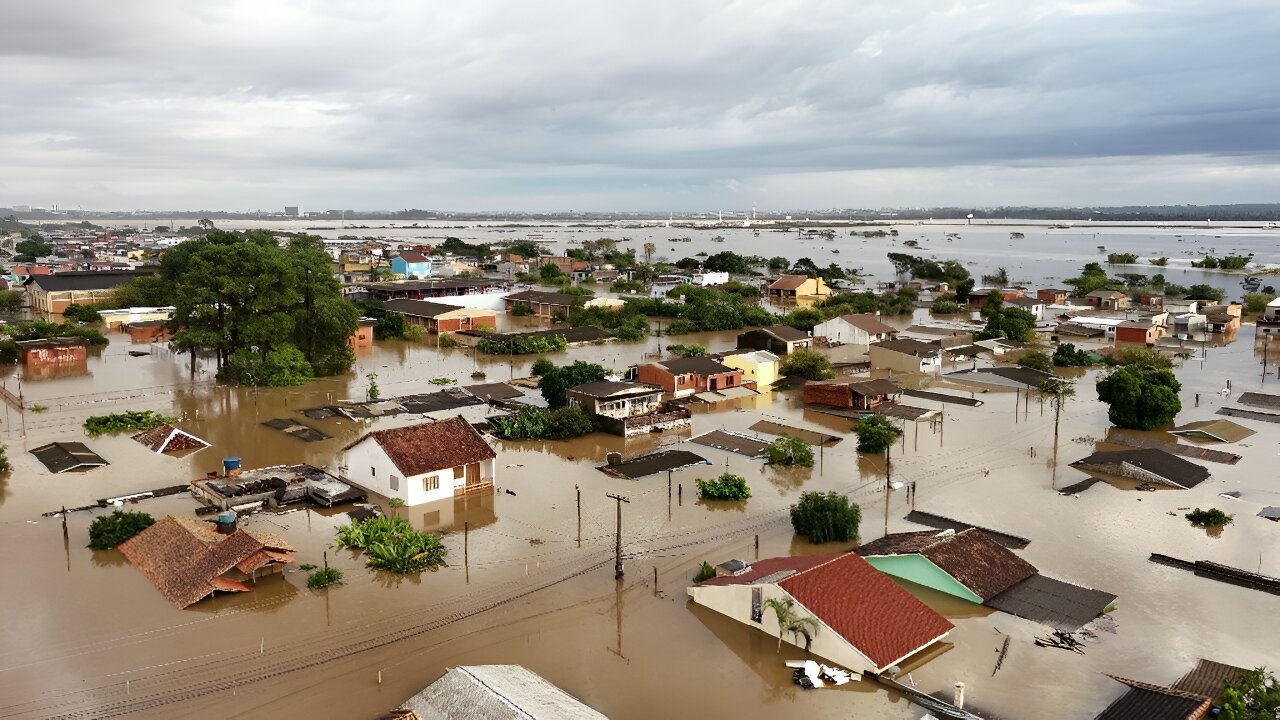
To ensure consistency and analytical value, all datasets underwent a standard preprocessing workflow involving cleaning, filtering, and harmonization. The five primary sources—S2ID, INMET, MapBiomas, IBGE, and geospatial shapefiles—were integrated at the municipality level.
The S2ID disaster records were filtered for hydrological events in 2024, cleaned for encoding issues, and aggregated into a single impact indicator.
INMET precipitation data from over 500 stations was standardized and joined with location metadata. Using MapBiomas, we calculated urban and forest cover change between 2013 and 2023, as well as exposure to urban flood risk zones. IBGE demographic data helped normalize indicators. All datasets were matched by municipality and state, producing an integrated file ready for visualization and analysis.
The following image illustrates the KNIME workflow used for data cleaning, normalization, and integration processes. This visual representation helps clarify how datasets were harmonized, enriched, and prepared for analytical processing.
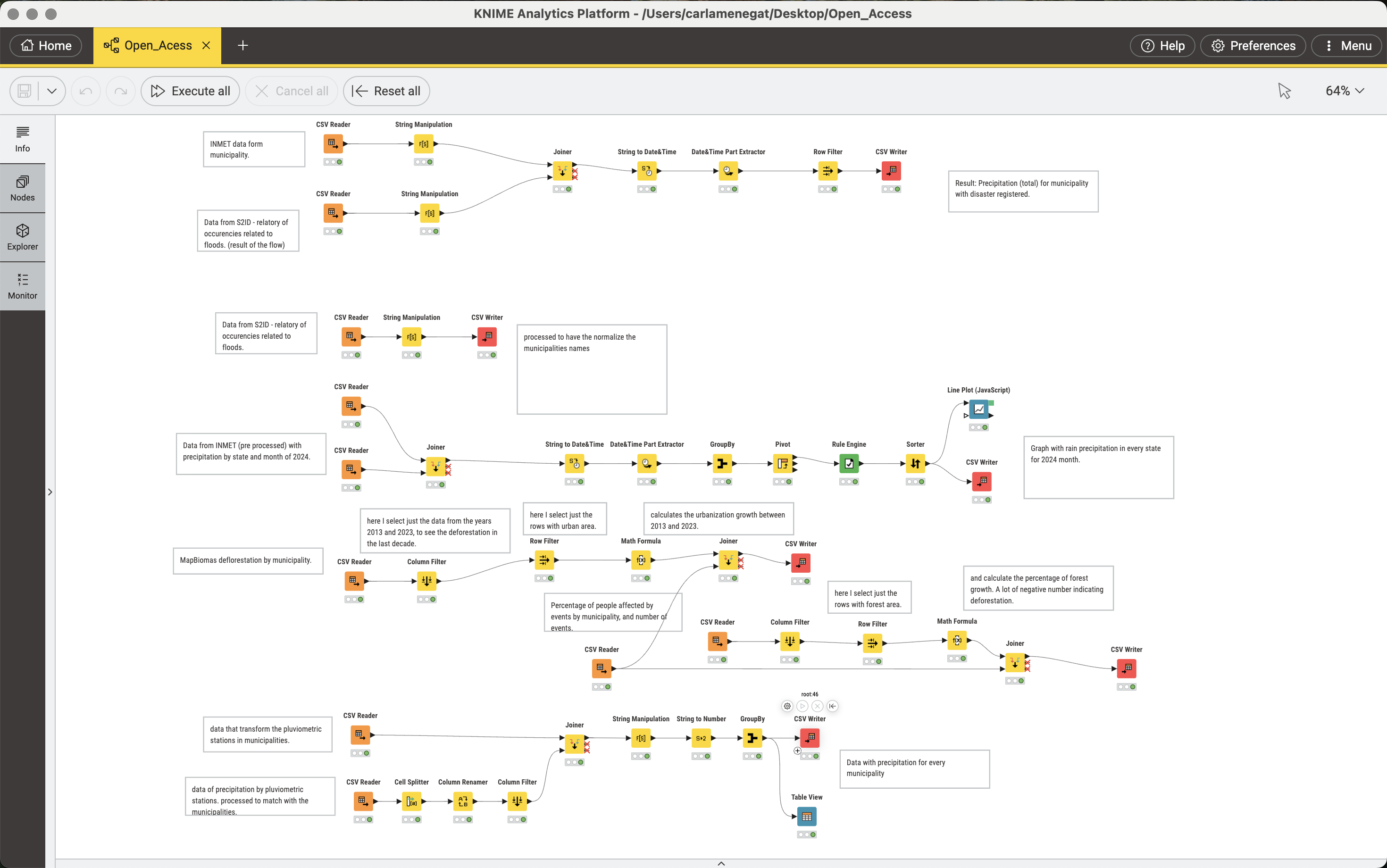
Click on the image to zoom in and see the details of the elaboration process.